

In the United Kingdom, the regulations regarding the size of outbuildings that can be constructed without planning permission are complex and multifaceted. These size restrictions, influenced by a myriad of factors such as property location, outbuilding purpose, and proximity to the main dwelling, can sometimes be difficult to navigate.
It is advisable for homeowners to have a thorough understanding of these rules before undertaking any construction project. What lies ahead is a detailed examination of these intricacies, which will equip you with the knowledge to plan your outbuilding project effectively.
Key Takeaways
- An outbuilding can be built without planning permission if it doesn't exceed 50% of the total land area.
- Outbuilding height should not exceed 2.5m within 2m of the property boundary to avoid needing planning permission.
- If an outbuilding is more than 2m from the boundary, it can have an eaves height of 2.5m without requiring permission.
- Exceptions to these rules apply for outbuildings under 2.5m in height and those used for agricultural purposes.
Understanding UK Planning Permissions

In the United Kingdom, it is essential to familiarise oneself with the planning permissions required for constructing outbuildings, as these regulations guarantee orderliness and prevent potential legal disputes. The planning permissions are governed by the Town and Country Planning Act 1990 and the General Permitted Development Order 2015, which offer a thorough framework for building regulations in the UK.
Understanding these permissions is not merely a legal requirement, it's an opportunity to innovate within the confines of the law. These regulations are designed to respect the aesthetics of the urban and rural landscapes, safeguard the environment, and make sure that constructions are safe and suitable for their intended use. They provide a canvas on which you can create your vision, with the assurance that your project will not only stand the test of time but also contribute positively to the built environment.
Whether you are planning to build a garden office, a studio, or a games room, understanding these permissions can liberate your creative process. It allows you to anticipate potential hurdles and plan your project with clarity, while also opening doors to innovative construction methods that comply with the UK's strict regulations.
Size Regulations for Outbuildings
Moving on from the general understanding of UK planning permissions, let us now examine the specific size regulations for outbuildings. To maintain within the limits of Permitted Development Rights, which authorize for the construction of certain structures without planning permission, your outbuilding must adhere to these measurements:
The total area covered by the outbuilding and any other buildings within the boundary of the property, excluding the original house, must not exceed 50% of the total land around the house. The building height, including any antenna, must not be more than 2.5 metres if the building is within 2 metres of the property boundary. If it is more than 2 metres from the property boundary, the maximum eaves height should be 2.5 metres, with an overall height of 4 metres for a dual pitched roof or 3 metres for other roof types.
Innovative designs must contemplate these guidelines while ensuring efficient utilization of space. Remember, these regulations guarantee that our neighborhoods maintain a harmonious visual aesthetic, and facilitate good neighborly relations by circumventing structures that may impinge on others' enjoyment of their property.
Rules for Different Outbuilding Types

Different types of outbuildings, such as sheds, garages, and greenhouses, each have specific rules and regulations to comply with within the UK planning permission framework. This is to make sure that these structures are constructed in a manner that respects the surrounding environment, maintains the character of the property, and conforms to health and safety standards.
To understand the planning permission requirements, it's important to take into account the following:
- Sheds: Primarily considered as temporary structures, sheds are often exempt from planning permission unless they exceed certain dimensions or are used for non-domestic purposes. However, they must be single-storey and not cover more than half of the land around the 'original house'.
- Garages: As structures intended for storing vehicles, garages may require permission if they're built towards the front of a property, exceed height restrictions, or are used for commercial purposes.
- Greenhouses: These structures, built for growing plants, usually don't require permission unless they're unusually large, used for business, or positioned too close to a boundary.
Exceptions to Planning Permission Rules
While UK planning regulations generally apply to outbuildings, there are remarkable exceptions to these rules that allow homeowners some flexibility in construction. Notably, these exceptions are designed to incentivise innovative utilisation of space and encourage creative architectural designs.
For instance, the UK planning regulations do not require permission for outbuildings that do not exceed 2.5 metres in height and occupy less than 50% of the land around the original house. This exception offers homeowners an opportunity to build inventive garden offices, studios or workshops without the need for lengthy planning permission processes.
Another exception is the 'permitted development rights', which allows homeowners in designated areas such as National Parks, Areas of Outstanding Natural Beauty, conservation areas, and World Heritage Sites, to construct outbuildings with specific constraints. This encourages imaginative solutions to work within these boundaries while respecting the unique environmental and aesthetic characteristics of these areas.
Some outbuildings, notably those intended for agricultural use, are exempt from planning permission altogether, facilitating innovative rural development.
These exceptions not only provide homeowners with the flexibility to enhance their property but also foster architectural creativity and efficient use of space.
Navigating Outbuilding Regulations
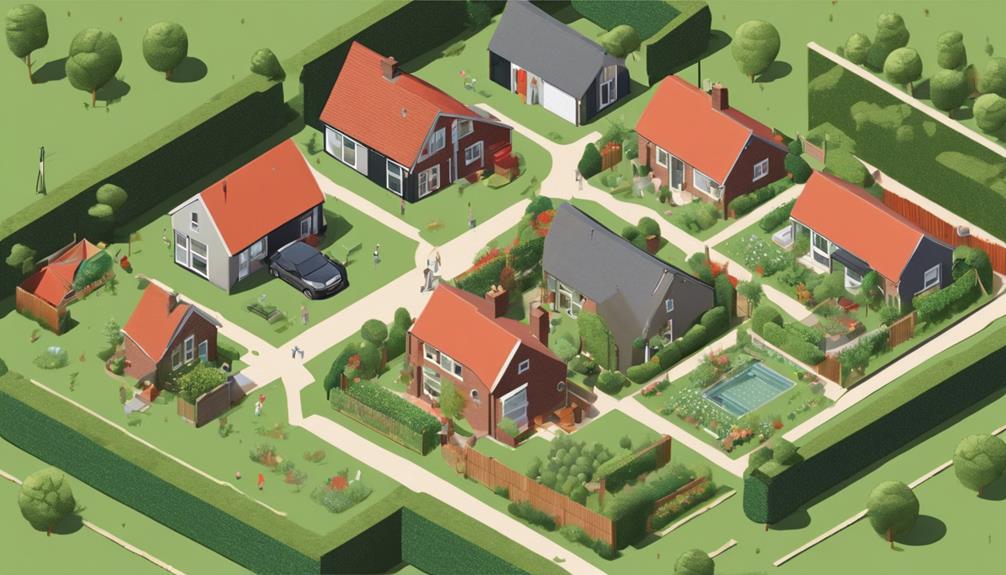
Understanding the exceptions to planning regulations is just the first step; homeowners must also navigate the specific regulations governing the construction of outbuildings to make sure their projects comply with UK law. This process might seem challenging, but with a clear understanding of these rules, it is entirely manageable.
First and foremost, homeowners need to take into account the size of the outbuilding. There are specific measurements, both with respect to height and overall footprint, that your outbuilding must not exceed. These limitations guarantee that your outbuilding will not be overly intrusive or overshadow neighbouring properties.
Next, the location of the outbuilding on your property matters. There are rules regarding how close to the boundary of the property the outbuilding can be.
Lastly, the usage of the outbuilding plays a critical role in determining whether planning permission is needed. There are restrictions on the types of activities that can be carried out in an outbuilding without planning permission.
- Understand the size restrictions
- Consider carefully the location of the outbuilding
- Be clear on the permissible uses of the outbuilding
Frequently Asked Questions
What Are the Potential Penalties for Building an Outbuilding Without Obtaining Planning Permission?
Potential penalties for constructing an outbuilding without securing planning permission in the UK can be severe. Violators may face enforcement actions, including the requirement to demolish the structure. Additionally, fines can be levied, and criminal prosecution is possible in serious cases.
It's important to explore and comply with local planning regulations to foster innovative yet legal building solutions, avoiding potential legal and financial repercussions.
What Factors Might Influence the Maximum Size of an Outbuilding I Can Build Without Planning Permission?
The maximum size of an outbuilding without planning permission is influenced by several factors. These include the property's location, the building's intended use, and its proximity to the main dwelling.
For instance, outbuildings within the curtilage of listed buildings may require planning permission regardless of size. It's also worth considering innovative designs that maximize usage whilst complying with regulations, to make sure your outbuilding serves its purpose without breaching planning laws.
How Does the Purpose of the Outbuilding Affect the Need for Planning Permission?
In the UK, the purpose of an outbuilding may impact planning permission requirements.
For instance, an outbuilding used for incidental purposes, like storage or a workshop, typically doesn't require planning permission if it adheres to certain size restrictions.
However, if the space is intended for living, such as a self-contained unit or annex, it is likely to require planning permission regardless of its size due to the change in usage.
Are There Any Circumstances Where I Might Be Granted an Exception for Building a Larger Outbuilding Without Planning Permission?
In exceptional circumstances, UK planning authorities may grant permission for larger outbuildings without the need for formal planning permission. This typically occurs when the building serves a purpose that benefits the community or has a low environmental impact.
However, these exceptions are rare and largely at the discretion of the local planning authority. It's advised to consult with your local planning department to explore potential exemptions.
Can I Modify an Existing Outbuilding to Make It Larger Without Obtaining Planning Permission?
In the UK, modifying an existing outbuilding to increase its size without planning permission is subject to limitations. The maximum height should not exceed 2.5 meters and the total area should not cover more than half the land around the original house. It must also not be used as a separate living space.
It is advisable to consult the local planning authority for detailed guidelines to guarantee compliance with the regulations.